
Our Blog



Understanding the True Impact of Website Outages on Recruitment Operations
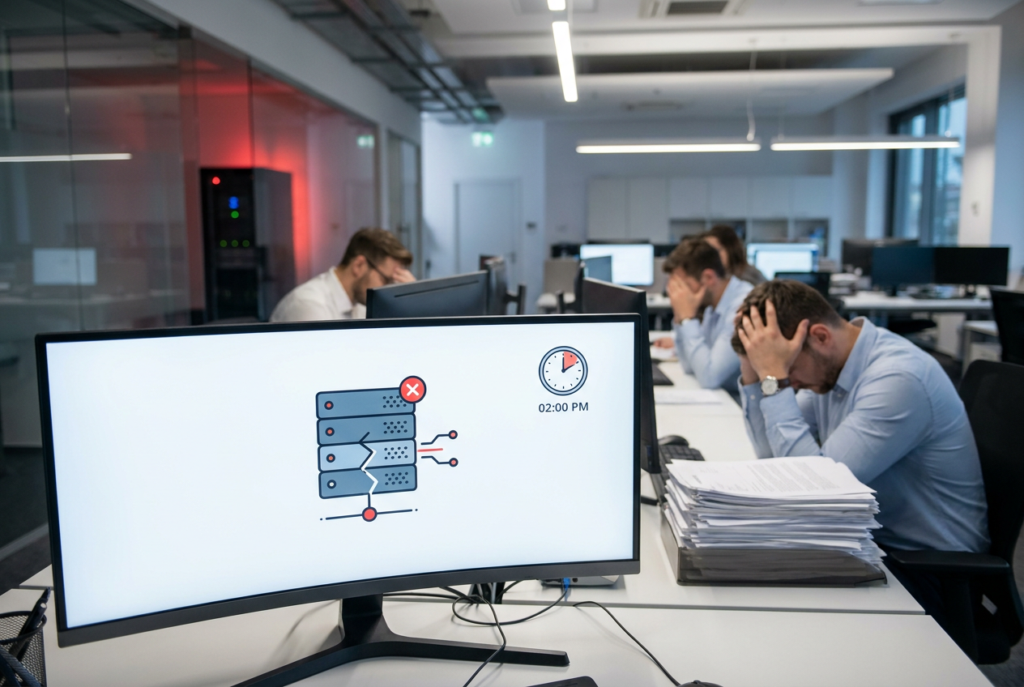
When your recruitment website goes down during peak hiring season, the damage extends far beyond a simple technical glitch. Picture this: It’s mid-October, and your staffing firm is frantically trying to fill seasonal retail positions while competing against dozens of other agencies. Your website crashes at 2 PM on a Tuesday, right when candidates typically browse job openings during lunch breaks. By the time your site is restored six hours later, you’ve lost more than just uptime.
The true cost of recruitment website downtime isn’t just measured in server restoration fees or IT support hours. For staffing firms operating in today’s competitive landscape, every minute of downtime during peak seasons translates to lost opportunities that compound across multiple business dimensions. Understanding these hidden costs becomes critical when evaluating your technology infrastructure and making decisions about website reliability investments.
Quantifying Lost Revenue During High-Volume Hiring Periods
Peak hiring seasons generate revenue at accelerated rates, making website downtime exponentially more costly than during slower periods. Consider a mid-sized staffing firm that typically processes 500 job applications per day during normal operations. During peak season, this number often doubles or triples, with each successful placement generating an average revenue of $3,500 to $8,000 depending on the role and industry.
When your website goes down for just four hours during peak season, you’re potentially losing access to 200-400 qualified candidates. If your typical conversion rate from application to placement is 8%, those four hours of downtime could cost you 16-32 placements, translating to $56,000 to $256,000 in lost revenue. These numbers become even more staggering when you factor in recurring client relationships and the lifetime value of successful candidate placements.
The financial impact intensifies when competing firms remain operational. Candidates don’t wait for websites to come back online, they simply move to the next available opportunity. Your downtime becomes your competitor’s advantage, shifting market share in real-time during the most profitable periods of the year.
The Ripple Effect on Client Relationships and Trust
Client relationships in staffing depend heavily on reliability and timely delivery. When your website fails during peak season, you’re not just disappointing individual job seekers, you’re failing clients who are counting on you to fill critical positions quickly. A manufacturing client expecting 50 temporary workers for their holiday production rush doesn’t care about your technical difficulties, they care about meeting their staffing deadlines.
Trust erosion happens faster than trust building. One significant outage during peak season can damage relationships that took months or years to establish. Clients start questioning whether your firm has the technological infrastructure to support their high-volume needs, often leading them to diversify their staffing partnerships or switch providers entirely.
The impact extends beyond immediate client dissatisfaction. Word travels quickly in staffing networks, and reliability concerns can affect your ability to secure new enterprise clients who require guaranteed uptime during critical hiring periods. Implementing robust staffing technology solutions becomes essential for maintaining competitive positioning.
How Downtime Affects Candidate Experience and Brand Perception
Today’s candidates expect seamless digital experiences, especially during peak job search periods when competition for quality talent intensifies. Website downtime creates immediate friction in the candidate journey, often resulting in permanent abandonment of your application process.
The candidate experience impact goes beyond the immediate inconvenience. Social media amplification means a single outage can generate dozens of negative reviews and social posts, damaging your employer brand precisely when visibility matters most. Peak seasons often coincide with increased candidate research and comparison shopping between staffing agencies.
Modern job seekers view website reliability as an indicator of overall business competence. If your website can’t handle peak traffic, candidates question whether your firm can handle their career needs effectively. This perception particularly affects younger demographics who constitute a significant portion of seasonal and temporary workforce candidates.
Long-Term Consequences for Market Positioning
Repeated downtime incidents during peak seasons create lasting competitive disadvantages that extend well beyond immediate revenue losses. Your firm’s reputation for reliability becomes a market differentiator, affecting everything from client acquisition to talent attraction and retention.
Search engine rankings also suffer from frequent downtime, reducing organic traffic precisely when seasonal keywords reach their highest search volumes. Recovery from these SEO impacts often takes months, meaning peak season downtime can affect your digital visibility through the following year’s hiring cycles.
Market positioning requires consistent performance during high-stakes periods. Firms that maintain reliable digital infrastructure during peak seasons establish themselves as premium providers, enabling higher margins and preferred vendor status with enterprise clients.
Peak Season Vulnerabilities: When Recruitment Websites Face Maximum Stress
Identifying Critical Hiring Periods and Traffic Spikes
Understanding when your recruitment website will face maximum stress requires analyzing both predictable seasonal patterns and client-specific hiring surges. Most staffing firms experience peak traffic during Q1 (January-March) when companies launch new hiring initiatives, and again during Q4 when businesses rush to fill positions before year-end budgets expire.
But the real challenge lies in identifying industry-specific peaks that can catch you off guard. Healthcare staffing websites typically see 300-400% traffic increases during flu season and summer vacation periods. Meanwhile, retail-focused staffing platforms experience massive spikes starting in August as companies prepare for holiday hiring.
Technology staffing firms face a different challenge entirely. Their traffic surges often coincide with major industry events, product launches, or economic shifts that trigger sudden demand for specialized talent. When a major tech company announces layoffs, competitor websites experience immediate traffic spikes as hiring managers scramble to capitalize on newly available talent.
The key is tracking your historical data to identify these patterns before they overwhelm your system. Most firms discover their peak periods only after experiencing costly downtime during critical hiring windows.
Common Infrastructure Failures During High-Demand Windows
Database bottlenecks represent the most frequent cause of recruitment website failures during peak periods. When hundreds of candidates submit applications simultaneously while recruiters run complex searches, standard database configurations simply can’t handle the concurrent load. The result? Page timeouts, failed form submissions, and frustrated users abandoning your platform.
Server memory exhaustion creates another common failure point. Staffing Technology that aren’t properly configured for peak loads often experience memory leaks during high-traffic periods, causing entire systems to crash when you need them most.
Content delivery network (CDN) failures compound these problems by creating geographic bottlenecks. When your CDN can’t distribute traffic effectively, users in certain regions experience extremely slow load times, effectively shutting them out during competitive hiring situations.
Third-party integration failures add another layer of complexity. Background check APIs, skills assessment platforms, and job board syndication services often have their own capacity limitations that can cascade into your website’s performance during peak periods.
The Perfect Storm: Simultaneous Client Campaigns and System Overload
The most devastating recruitment website crashes occur when multiple large clients launch hiring campaigns simultaneously, creating unprecedented demand on your infrastructure. Picture this scenario: three major clients each launch 50+ job postings on the same Monday morning, while your existing candidate database receives automated job match notifications.
Within hours, your website faces thousands of new job applications, hundreds of recruiter searches, and continuous database updates from automated matching algorithms. Meanwhile, traffic generation from organic search and job board partnerships compounds the load as candidates discover your newly posted positions.
This perfect storm scenario becomes even more problematic when clients demand real-time reporting during their campaigns. Dashboard queries, candidate export functions, and analytics processing add computational overhead that can push already-stressed systems beyond their breaking point.
The timing of these storms often coincides with industry hiring cycles, making them predictable yet still challenging to prepare for without proper infrastructure planning.
Why Traditional Hosting Solutions Fall Short
Standard shared hosting environments, still used by many smaller staffing firms, simply cannot scale to meet peak demand requirements. These solutions rely on fixed resource allocations that work fine during normal operations but catastrophically fail when traffic spikes occur.
Even dedicated server setups often lack the flexibility needed for recruitment website peak loads. Unlike e-commerce sites that experience gradual traffic increases, staffing platforms face sudden, massive spikes that require immediate scaling capabilities.
Traditional hosting providers typically offer manual scaling solutions that require hours or days to implement. But recruitment opportunities don’t wait for infrastructure upgrades. When a major client launches a time-sensitive campaign, your website needs to handle the traffic immediately or risk losing valuable placements to competitors.
Legacy hosting architectures also struggle with the database-intensive nature of recruitment platforms, which require complex queries, real-time matching algorithms, and continuous data synchronization. These operations demand specialized infrastructure optimization that traditional hosting simply doesn’t provide.
The lack of redundancy in traditional setups creates single points of failure that become critical vulnerabilities during peak seasons when system reliability directly impacts revenue generation.
The Financial Breakdown: Calculating Hidden Costs Beyond Lost Applications
Emergency IT Support and Recovery Expenses
When your recruitment website crashes during peak hiring season, the clock starts ticking on emergency IT costs that can quickly spiral out of control. Most staffing firms discover that their regular hosting provider’s standard support simply isn’t equipped to handle urgent outages during high-traffic periods.
Emergency technical support rates typically range from $200-500 per hour, with many providers requiring minimum 4-hour blocks for urgent weekend or holiday calls. But that’s just the beginning. Database recovery from corrupted systems can cost an additional $150-300 per hour, especially when dealing with candidate data that spans multiple years.
Server migration during an outage becomes exponentially more expensive than planned migrations. What might cost $2,000 during normal operations can balloon to $8,000-12,000 when you’re racing against time with peak season traffic. The pressure to get back online means accepting premium pricing from emergency hosting providers who understand your desperation.
Consider a mid-sized staffing agency that experienced a 6-hour outage during their busiest recruiting week. Emergency support costs alone reached $3,400, plus an additional $2,800 for expedited database restoration and $4,500 for temporary high-capacity server deployment.
Client Compensation and Service Level Agreement Penalties
Many staffing firms operate under Service Level Agreements (SLAs) with their largest corporate clients, and website downtime during critical hiring periods can trigger expensive penalty clauses. These agreements often specify uptime guarantees of 99.5% or higher, with financial penalties for each hour of unavailability.
A typical SLA penalty might seem manageable at first glance (perhaps $500-1,000 per hour of downtime), but the real cost comes from client compensation demands. When a Fortune 500 client can’t access your portal to review candidates for time-sensitive positions, they expect more than just restored service.
Relationship repair costs often exceed the immediate penalties. Offering reduced fees on current placements, extending contract terms at discounted rates, or providing additional services at no charge can easily cost $10,000-25,000 per affected client relationship. One staffing firm reported spending $40,000 in client concessions after a 12-hour outage prevented candidates from applying for urgent healthcare positions.
The ripple effect extends beyond immediate penalties. Clients begin questioning your technology infrastructure, leading to more stringent contract terms, increased reporting requirements, and sometimes the dreaded “backup vendor” conversations that signal eroding trust.
Marketing Budget Waste from Driving Traffic to Broken Sites
Peak season recruiting means peak marketing spend, and website downtime can transform your carefully orchestrated campaigns into expensive failures. Every click to your broken site represents wasted advertising dollars, but the damage goes deeper than immediate cost-per-click losses.
Google Ads campaigns running during downtime periods typically see quality scores plummet, increasing future advertising costs by 20-40% even after the site is restored. A staffing firm spending $15,000 monthly on Google Ads might face an additional $3,000-6,000 in increased costs for several months as they rebuild their quality metrics.
Social media advertising becomes particularly painful during outages. Facebook and LinkedIn ads driving traffic to high-converting staffing websites suddenly deliver frustrated users to error pages, destroying conversion rates and damaging your brand’s social media reputation through negative comments and reviews.
Email marketing campaigns suffer similar fate. That carefully timed newsletter promoting your latest job opportunities, sent to 50,000 candidates during peak application season, now drives traffic to a broken site. The immediate waste might be $2,000-4,000 in email marketing costs, but the long-term damage to email deliverability and subscriber engagement can cost much more.
Employee Productivity Loss and Overtime Costs
Website downtime doesn’t just stop external operations; it paralyzes internal productivity in ways that create cascading cost effects. Recruiters who rely on web-based tools for candidate screening, client communication, and job posting management suddenly find themselves unable to perform core functions.
A team of 10 recruiters earning an average of $65,000 annually costs roughly $31 per hour per person in total compensation. During an 8-hour outage, you’re looking at $2,480 in lost productivity, but that’s the optimistic calculation assuming they can find alternative work.
The reality is often worse. Recruiters spend downtime manually recreating processes that should be automated, leading to errors that require correction later. When systems come back online, the backlog creates overtime scenarios where you’re paying time-and-a-half rates ($46 per hour) to catch up on work that should have been completed at regular rates.
Administrative staff face similar challenges. Unable to process applications, update candidate records, or generate client reports, they either sit idle (costing money) or work overtime later to handle the accumulated backlog. One 200-employee staffing firm calculated that a single day of website downtime resulted in $12,000 in overtime costs during the following week as teams scrambled to restore normal operations.
Competitive Disadvantage: How Downtime Hands Opportunities to Rivals
Candidate Flow Diversion to Competitor Platforms
When your recruitment platform goes dark during peak hiring season, candidates don’t wait around. They immediately pivot to competitor platforms that are operational and accessible. This shift happens within minutes, not hours, as job seekers in today’s market expect instant access to opportunities.
The impact is particularly severe for specialized industries where candidate pools are already limited. A finance staffing firm experiencing downtime during year-end hiring season can lose top-tier candidates to competitors who maintain robust platform reliability during these critical periods. These candidates often don’t return once they’ve begun application processes elsewhere.
Mobile traffic patterns reveal the harsh reality of candidate behavior during outages. Data shows that 78% of candidates who encounter a non-functional job board on mobile devices will switch to a competitor’s platform within 90 seconds. The convenience factor weighs heavily in staffing decisions, and downtime immediately eliminates that advantage.
Peak seasons amplify this diversion because candidates are actively comparing multiple opportunities. When your platform becomes inaccessible, competitors automatically gain a larger share of qualified applicant traffic. This creates a compound effect where your downtime directly feeds your competitors’ candidate pipelines.
Client Migration Patterns Following Service Disruptions
Client loyalty in the staffing industry has definite limits, and recruitment website downtime tests those boundaries severely. Enterprise clients who depend on consistent access to candidate pools become increasingly receptive to competitor pitches following significant service disruptions.
Construction staffing firms face particularly acute pressure during spring hiring rushes. When their primary recruitment platform experiences downtime, project managers can’t afford to wait for technical resolution. They immediately begin evaluating alternative staffing partners with more reliable technology infrastructure.
Service level agreements (SLAs) often include uptime guarantees, but the relationship damage extends beyond contractual penalties. Clients remember disruptions during critical hiring periods, and this memory influences renewal negotiations and long-term partnership decisions. Even brief outages during peak seasons can trigger client diversification strategies.
The migration pattern typically follows a predictable sequence: initial frustration, emergency alternative sourcing, performance comparison during the crisis, and gradual shift of primary business to more reliable competitors. This process accelerates when downtime occurs during high-stakes hiring periods where client delivery commitments are on the line.
Search Engine Ranking Impact and SEO Recovery Time
Search engines interpret website downtime as a signal of poor user experience, and the ranking penalties can persist long after technical issues resolve. During peak recruiting seasons when organic search traffic is most valuable, these penalties create lasting competitive disadvantages.
Google’s algorithms are particularly unforgiving of downtime during high-traffic periods. When staffing websites experience outages during seasonal hiring surges, search engines redirect traffic to competitor sites that maintain consistent availability. This traffic diversion often becomes permanent as search algorithms adapt to user behavior patterns established during the outage.
Recovery time for search rankings typically ranges from 4-12 weeks after downtime resolution, depending on the duration and frequency of outages. For staffing firms operating in competitive markets, this recovery period represents sustained visibility loss to competitors who maintained operational stability.
The SEO impact compounds because peak seasons generate the highest volume of industry-specific searches. When your recruiting websites are inaccessible during these crucial periods, competitors capture not only immediate traffic but also long-term search authority in your target keywords and geographic markets.
Market Share Erosion in Key Industry Verticals
Downtime during peak seasons creates permanent shifts in competitive positioning within specific industry verticals. Finance staffing firms competing for year-end accounting roles can lose entire market segments when their platforms fail during December hiring rushes.
Specialized recruitment niches are particularly vulnerable because candidate and client communities are tightly connected. Word of downtime spreads quickly through industry networks, and competitors actively leverage these service failures in their business development efforts. One significant outage can shift market perception and competitive dynamics for months.
Market share erosion accelerates when downtime affects mission-critical hiring periods specific to each vertical. Healthcare staffing firms experiencing outages during flu season hiring, or retail staffing platforms failing during holiday preparation periods, face immediate and measurable competitive displacement in their core markets.
The erosion typically follows a 70-20-10 pattern: 70% of affected business migrates to the primary competitor, 20% splits among secondary competitors, and only 10% returns after service restoration. This distribution creates lasting advantages for competitors who maintain operational excellence during peak demand periods.
Building Resilient Infrastructure: Prevention Strategies for Recruitment Platforms
Implementing Scalable Cloud Architecture Solutions
Modern recruitment platforms require infrastructure that can handle sudden traffic spikes without breaking the budget. Cloud-based solutions offer the flexibility to scale resources up during peak hiring seasons and scale down during quieter periods, ensuring you only pay for what you use.
Auto-scaling groups represent the foundation of resilient recruiting websites architecture. These systems monitor CPU usage, memory consumption, and incoming traffic patterns to automatically provision additional servers when demand increases. During seasonal hiring surges, your platform can seamlessly expand from handling 1,000 concurrent users to 10,000 without manual intervention.
Content delivery networks (CDNs) reduce server load by caching static assets like images, stylesheets, and job posting templates across geographically distributed edge servers. When candidates in different regions access your platform simultaneously, CDNs ensure fast loading times while protecting your origin servers from overwhelming traffic.
Database optimization becomes critical during peak seasons. Implementing read replicas distributes query loads across multiple database instances, preventing the primary database from becoming a bottleneck. For recruitment platforms handling thousands of job applications daily, database clustering and horizontal scaling prevent the performance degradation that leads to lost candidates.
Load Testing and Performance Monitoring Best Practices
Proactive load testing reveals how your recruitment platform performs under realistic traffic conditions before peak season arrives. Many staffing firms discover performance issues only when thousands of candidates simultaneously access their job boards during major hiring campaigns.
Synthetic monitoring simulates real user journeys through your platform 24/7. These automated tests check critical workflows like job searches, application submissions, and candidate profile creation from multiple geographic locations. When performance degrades below acceptable thresholds, alerts notify your technical team before candidates experience problems.
Real user monitoring (RUM) captures actual performance data from live traffic, providing insights into how different devices, browsers, and connection speeds affect the candidate experience. This data helps identify specific bottlenecks that synthetic tests might miss, such as slow-loading job descriptions or unresponsive application forms during high-traffic periods.
Performance baselines establish normal operating parameters for your platform. By tracking metrics like page load times, server response rates, and database query speeds during regular operations, you can quickly identify when performance deviates from expected ranges during peak seasons.
Creating Redundancy Plans and Failover Systems
Multi-region deployments ensure your recruitment platform remains accessible even if an entire data center experiences outages. Geographic redundancy becomes especially important during peak hiring seasons when downtime directly translates to lost revenue and frustrated candidates.
Database failover systems automatically switch to backup databases when primary systems fail. Modern staffing websites implement automated failover with recovery time objectives (RTO) under five minutes, ensuring minimal disruption to ongoing recruitment activities.
Load balancer health checks continuously monitor server availability and automatically route traffic away from failing instances. When servers become unresponsive during traffic spikes, load balancers redirect requests to healthy servers, maintaining platform availability while administrators address underlying issues.
Backup and disaster recovery procedures require regular testing to ensure effectiveness. Many staffing firms maintain comprehensive backup strategies that remain untested until actual emergencies occur. Monthly failover drills validate recovery procedures and identify potential gaps in redundancy planning.
Establishing Proactive Maintenance Schedules
Strategic maintenance windows prevent small issues from becoming major outages during peak recruitment periods. Scheduling routine maintenance during low-traffic hours minimizes impact on candidate experience while ensuring optimal platform performance when demand increases.
Database maintenance tasks like index optimization and query plan updates significantly improve performance during high-traffic periods. Regularly analyzing slow queries and optimizing database schemas prevents the gradual performance degradation that often leads to peak-season outages.
Security patches and software updates require careful timing around recruitment cycles. Implementing website optimization strategies includes maintaining current software versions while avoiding disruptive updates during critical hiring periods.
Capacity planning reviews should occur quarterly, analyzing historical traffic patterns to predict future infrastructure needs. Proactive resource allocation prevents the scramble to add capacity during unexpected traffic surges, ensuring your recruitment platform can handle growth without compromising performance or candidate experience.
Developing Your Downtime Response Playbook
Crisis Communication Templates for Clients and Candidates
When your recruiting platform fails during critical hiring periods, having pre-written communication templates saves precious minutes that could mean the difference between retaining or losing key clients. Your crisis communications need to acknowledge the issue immediately while demonstrating control and providing clear next steps.
Create separate templates for different stakeholder groups. Client notifications should focus on business impact mitigation, stating exactly how their active job postings and candidate pipelines remain protected. Include specific timelines for resolution and alternative contact methods. For candidates, emphasize that their applications are secure and provide backup submission options through direct email or phone.
Your templates must include placeholder fields for incident-specific details like estimated resolution time, affected services, and workaround procedures. Template effectiveness depends on speed of deployment, which means having pre-approved messaging that doesn’t require multiple approval layers during crisis moments.
Consider creating tiered communication schedules. Initial notifications go out within 15 minutes of confirmed downtime, followed by hourly updates for extended outages. This proactive approach prevents the flood of inbound inquiries that overwhelms your support team when clients discover issues independently.
Internal Team Coordination and Escalation Protocols
Peak season recruitment website failures require surgical precision in team coordination. Your response team structure should mirror military-style command chains, with clear decision-making authority at each level and predetermined escalation triggers that remove guesswork from critical moments.
Establish primary and secondary response teams with specific role assignments. Your technical team handles system restoration, while client services manages external communications and business continuity measures. Support staff should have scripted responses for common inquiries and direct escalation paths for complex issues.
Critical escalation triggers include downtime extending beyond 30 minutes during peak hours, data integrity concerns, or security breach indicators. Each trigger activates specific response protocols and notification sequences that bring appropriate expertise to bear without creating communication chaos.
Document decision trees that guide your team through common scenarios. When candidate application volumes are high and your primary system fails, your protocol might route new applications through backup forms while technical teams restore primary functionality. These predetermined paths eliminate dangerous improvisation during high-stress situations.
Data Recovery and Backup Verification Procedures
Data recovery during peak recruitment seasons demands more than hoping your backups work. Your verification procedures need regular testing schedules that confirm backup integrity and restoration speed under actual load conditions that mirror your busiest periods.
Monthly backup restoration tests should simulate real failure scenarios, including partial database corruption and complete system failures. Time each restoration process and document any data gaps or integrity issues. Your recovery time objectives should account for peak season transaction volumes, which often stress systems beyond normal capacity.
Candidate application data requires special attention during recovery procedures. Job applications submitted during downtime windows need immediate verification and processing to prevent candidate abandonment. Your recovery protocols should prioritize recent applications and active job postings that directly impact client relationships.
Consider implementing real-time data replication to geographically distributed backup systems. This approach provides near-instantaneous failover capabilities that minimize data loss windows during critical recruitment periods when every application matters.
Post-Incident Analysis and Improvement Implementation
Effective post-incident analysis transforms costly downtime into valuable intelligence that strengthens your platform against future failures. Your analysis process should begin immediately after service restoration while technical details remain fresh and stakeholder feedback flows naturally.
Document the complete timeline from initial failure indicators through full restoration. Include technical root causes, response team performance, communication effectiveness, and client impact measurements. This comprehensive record provides the foundation for meaningful improvements rather than surface-level fixes.
Client feedback collection during post-incident phases reveals business impact details that technical metrics miss. Survey clients about their experience, alternative actions taken, and suggestions for improved communication. This feedback often uncovers revenue impact patterns that justify infrastructure investments.
Implementation improvements should address both technical and process weaknesses identified during analysis. Technical fixes might include additional monitoring systems or infrastructure redundancy, while process improvements could involve faster notification procedures or enhanced backup communication channels.
Building resilience into your recruiting websites requires constant evolution based on real-world failure experiences. Your downtime response playbook becomes a living document that adapts to changing business needs and technological landscapes. Regular playbook updates ensure your team maintains readiness for the unexpected challenges that peak seasons inevitably bring, protecting both your reputation and your clients’ critical hiring objectives.