
Our Blog

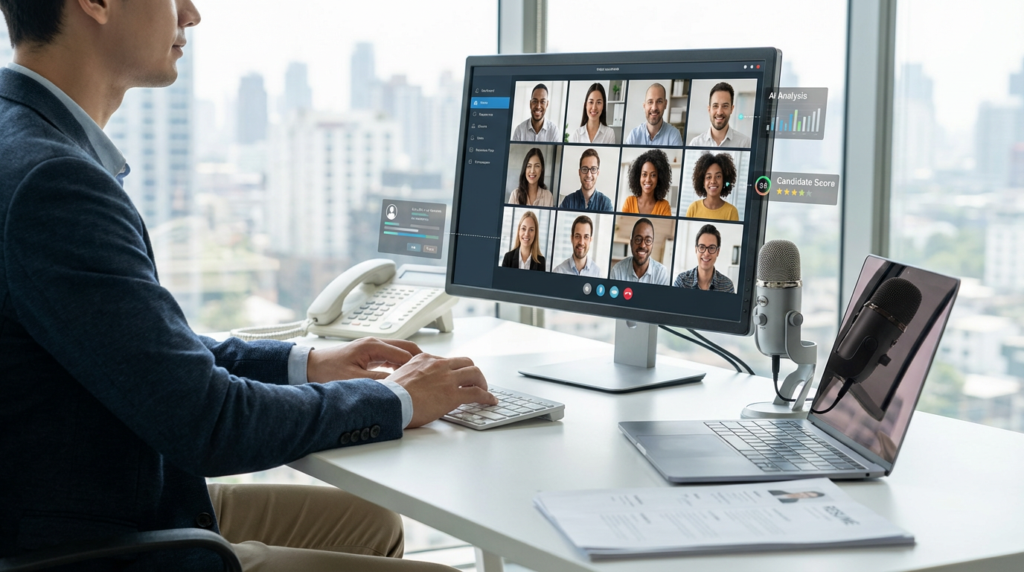


The Evolution of Remote Hiring: Why Video Integration is Critical
Traditional Assessment Limitations in a Remote-First World
The traditional hiring playbook collapsed overnight when remote work became standard. Phone screens and in-person interviews, once the backbone of recruitment, suddenly felt as outdated as fax machines. Recruiters found themselves struggling to evaluate soft skills, team chemistry, and cultural fit through static resume reviews and awkward phone conversations.
Consider the typical pre-2020 assessment process: candidates would travel to offices, sit through panel interviews, and engage in whiteboard sessions. This approach worked when geography wasn’t a barrier, but it created massive blind spots in a distributed workforce. How do you assess communication skills when you can’t see facial expressions? How do you evaluate presentation abilities through audio-only calls?
The limitations became even more pronounced for staffing firms managing high-volume recruitment. Without visual cues and real-time interaction, time-to-fill metrics stretched longer, and candidate drop-off rates increased. Many staffing websites reported that traditional assessment methods were creating bottlenecks rather than streamlining the hiring process.
The Rise of Hybrid Recruitment Models
Smart recruitment teams recognized that the future wasn’t entirely remote or completely in-person. Instead, hybrid models emerged that combined the best of both approaches. Video integration became the bridge between traditional face-to-face assessment and the flexibility demands of modern talent acquisition.
This shift represented more than just adding video calls to the process. Forward-thinking organizations began incorporating asynchronous video assessments, allowing candidates to complete recorded interviews on their own schedule. This approach particularly benefited global recruitment efforts where time zones previously created scheduling nightmares.
The hybrid model also addressed a critical challenge in competitive talent markets: candidate experience. Top-tier candidates, especially in tech and specialized roles, began expecting sophisticated, streamlined assessment processes. Organizations that clung to outdated methods found themselves losing talent to competitors who embraced strategic assessment approaches that respected candidate time while maintaining assessment quality.
Cost and Time Efficiency Gains Through Digital Transformation
The financial impact of video integration extends far beyond eliminating travel expenses. Research indicates that companies using video recruitment software reduce their time-to-hire by an average of 40-60%. This acceleration comes from multiple factors: faster scheduling, reduced no-shows, and the ability to conduct multiple rounds of interviews in compressed timeframes.
But the real efficiency gains emerge in the screening process. Video interview platforms enable recruiters to assess dozens of candidates through recorded sessions, allowing them to quickly identify top performers without coordinating complex scheduling matrices. A single recruiter can now effectively manage assessment processes that previously required entire teams.
For staffing firms operating on thin margins, these efficiency improvements translate directly to profitability. The cost per hire decreases significantly when video tools eliminate the overhead of coordinating in-person interviews, while simultaneously improving the quality of candidate assessments through standardized processes and recorded evaluations.
Building Competitive Advantage in Talent Acquisition
Video integration isn’t just about keeping up with industry trends. It’s about creating sustainable competitive advantages in increasingly crowded talent markets. Organizations that master video recruitment technology can access wider talent pools, reduce geographic constraints, and create more inclusive hiring processes.
The competitive edge becomes particularly apparent in specialized recruiting. When you can effectively assess candidates from anywhere in the world, your talent pool expands exponentially. This capability matters especially for roles requiring specific technical skills or industry experience where local markets may have limited options.
Furthermore, companies with sophisticated video assessment capabilities can provide better candidate experiences, leading to stronger employer branding and higher offer acceptance rates. Candidates appreciate the flexibility and professionalism of well-executed video interviews, and this positive experience influences their decision-making process.
The data supports this competitive advantage. Companies implementing comprehensive talent acquisition measurement consistently show that video-enabled recruitment processes deliver higher-quality hires while reducing overall recruitment costs. This combination of improved outcomes and operational efficiency creates a compelling business case for video integration in modern recruitment strategies.
Core Technologies Revolutionizing Candidate Assessment
AI-Powered Interview Analysis and Scoring
Modern video recruitment software leverages artificial intelligence to analyze candidate responses beyond traditional human observation. These systems evaluate facial expressions, vocal patterns, and speech content to generate comprehensive candidate profiles. Machine learning algorithms assess communication skills, confidence levels, and cultural fit indicators through micro-expressions and linguistic analysis.
Advanced platforms now score candidates on dozens of behavioral competencies automatically. The technology identifies keywords, measures response quality, and flags potential red flags in real-time during interviews. This automated analysis reduces unconscious bias by focusing on quantifiable data points rather than subjective impressions.
Some platforms achieve 85% accuracy rates when predicting job performance based on video interview assessments. These insights help recruiting teams make data-driven hiring decisions while maintaining consistent evaluation standards across all candidates. The AI continuously learns from successful hires to improve future recommendations.
Real-Time Collaboration Tools for Multi-Stakeholder Reviews
Video interview platforms enable multiple team members to participate simultaneously in candidate evaluations without scheduling conflicts. Hiring managers, department heads, and HR representatives can join live interviews or review recorded sessions with integrated commenting systems. This collaborative approach accelerates decision-making while ensuring diverse perspectives influence hiring choices.
Modern platforms include synchronized note-taking features where team members can timestamp observations and share feedback instantly. Stakeholders rate candidates independently before comparing scores to identify consensus or areas requiring discussion. This structured approach prevents groupthink while maintaining objective evaluation criteria.
The technology supports asynchronous collaboration through shared candidate profiles and evaluation dashboards. Team members review interviews on their own schedules while contributing to centralized feedback repositories. This flexibility particularly benefits distributed teams working across different time zones or busy executives with limited availability.
Automated Scheduling and Workflow Management
Video recruitment software eliminates scheduling friction through intelligent calendar integration and automated coordination. Candidates receive personalized interview links with automated reminders and technical requirement checks. The system manages timezone conversions, sends confirmation emails, and provides backup interview slots automatically.
Workflow automation ensures consistent candidate experiences while reducing administrative overhead. When implementing automated screening technologies alongside video interviews, recruiting teams report 60% faster time-to-hire metrics. The platforms trigger follow-up actions based on interview outcomes, moving qualified candidates through successive interview rounds without manual intervention.
Advanced scheduling features include candidate self-service portals where applicants select preferred interview times from available slots. The system automatically blocks interviewer calendars, sends meeting invitations, and manages rescheduling requests. This streamlined process reduces back-and-forth communications while improving candidate satisfaction scores.
Integration Capabilities with Existing ATS Platforms
Leading video interview platforms seamlessly connect with applicant tracking systems through robust API frameworks. This integration synchronizes candidate data, interview recordings, and evaluation scores directly into existing recruitment workflows. Hiring teams access video assessments within their familiar ATS interfaces without switching between multiple applications.
The technology supports single sign-on authentication and maintains data security compliance across integrated systems. Candidate profiles automatically update with video interview results, eliminating duplicate data entry and reducing administrative errors. These connections enable comprehensive reporting that combines traditional recruiting metrics with video assessment insights.
Modern platforms integrate with popular ATS solutions including Greenhouse, Lever, and Workday through pre-built connectors. When evaluating different options, teams should consider staffing technology vendor criteria that prioritize seamless integration capabilities. Custom API development supports unique workflow requirements for organizations with specialized recruitment processes.
The integration extends beyond basic data synchronization to include automated trigger events and conditional workflows. Video interview completions can automatically advance candidates to next interview stages or trigger reference check processes. This level of automation ensures consistent candidate progression while maintaining detailed audit trails for compliance requirements.
Enterprise-grade platforms provide dedicated integration support and sandbox environments for testing custom workflows. These capabilities enable organizations to optimize their entire recruitment technology stack around video assessment outcomes. The result is a unified candidate evaluation process that leverages both traditional screening methods and innovative video analysis technologies.
Enhancing Candidate Experience Through Strategic Implementation
Creating Seamless User Interfaces for Technical and Non-Technical Roles
The most effective video recruitment software adapts to different candidate comfort levels with technology. Technical roles often attract candidates familiar with digital interfaces, but administrative, sales, and executive positions may include professionals who prefer straightforward interactions. Your platform needs to accommodate both extremes without sacrificing functionality.
Modern cross-platform integration strategies ensure consistency across different entry points. Whether candidates access your system through email invitations, job board links, or direct website portals, the experience should feel familiar and intuitive. Consider implementing progressive disclosure – showing basic controls first, with advanced features available through clearly labeled options.
Visual hierarchy plays a crucial role here. Use contrasting colors for primary actions like “Start Interview” while keeping secondary options like audio settings in subdued tones. Include tooltips that explain technical terms without cluttering the interface. This approach reduces cognitive load for nervous candidates while maintaining professional credibility.
Mobile-First Design for Maximum Accessibility
Current data shows 78% of job seekers use mobile devices during their job search process. Video interview platforms must function flawlessly on smartphones and tablets, not just desktop computers. This means rethinking traditional layouts that assume large screens and precise cursor control.
Touch-friendly buttons need adequate spacing to prevent accidental taps. Text should remain readable without zooming, and video controls must work with finger gestures rather than mouse hovers. Consider how candidates hold their phones – vertical orientation should feel natural, but landscape mode needs to provide optimal video quality for the actual interview recording.
Network considerations become critical on mobile networks. Implement adaptive bitrate streaming that automatically adjusts video quality based on connection strength. Provide clear indicators when the system detects poor connectivity, offering options to switch to audio-only mode or reschedule without penalty. These features demonstrate understanding of real-world candidate circumstances.
Reducing Technical Barriers and Connection Issues
Connection failures create immediate negative impressions and can eliminate qualified candidates who assume the problem reflects poorly on their technical abilities. Proactive troubleshooting prevents most common issues before they impact the candidate experience.
Browser compatibility checks should run automatically when candidates first access the platform. Rather than generic error messages, provide specific solutions: “Chrome version 98 or newer required” with direct download links. Include alternative access methods for candidates using corporate networks with restricted permissions or outdated systems.
Bandwidth optimization extends beyond video compression. Pre-load essential interface elements while testing connection stability in the background. If latency issues appear likely, suggest optimal timing for the interview based on network patterns. Some recruiting and ai systems now predict connection quality based on geographic location and time of day, allowing proactive scheduling adjustments.
Audio quality often matters more than video resolution for assessment purposes. Implement noise cancellation features that work across different microphone types, from laptop built-ins to professional headsets. Provide audio level indicators so candidates can adjust their setup before the formal interview begins.
Providing Clear Instructions and Practice Opportunities
Practice sessions eliminate anxiety while familiarizing candidates with your specific platform features. These sessions should mirror the actual interview environment exactly, including any recording indicators, timer displays, or question formats they’ll encounter. Candidates who understand the process focus on showcasing their qualifications rather than navigating unfamiliar technology.
Instruction delivery impacts comprehension rates significantly. Written guides work well for reference, but short video demonstrations prove more effective for showing actual interaction patterns. Include examples of common scenarios: what happens if they lose connection mid-answer, how to pause for technical issues, or when they can request question clarification.
Consider different learning preferences through multiple instruction formats. Some candidates prefer step-by-step checklists, while others learn better through interactive tutorials. Offering both options without overwhelming the interface requires thoughtful information architecture.
Technical support availability during practice sessions builds confidence for the actual interview. Even simple chat support that addresses basic questions like “Can you hear me clearly?” or “Is my lighting adequate?” provides reassurance. This investment in candidate experience pays dividends through improved completion rates and more authentic responses during formal assessments.
Data-Driven Insights for Smarter Hiring Decisions
Leveraging Interview Analytics to Identify Top Performers
Video interview platforms generate unprecedented volumes of assessment data that traditional phone screens simply can’t match. Every candidate interaction produces measurable insights—response times, verbal confidence indicators, and communication clarity scores that help recruiters identify patterns among successful hires.
Smart staffing firms track specific metrics like average response time to technical questions, which often correlates with problem-solving speed in actual job performance. When candidates consistently answer behavioral questions with structured examples within 90 seconds, they typically demonstrate better organizational skills during onboarding. These data points, collected across hundreds of interviews, reveal which communication styles translate into workplace success.
Modern recruitment technology platforms automatically flag candidates who exhibit specific verbal patterns associated with high retention rates. For instance, candidates who ask clarifying questions during technical discussions show 34% higher job satisfaction scores after six months compared to those who don’t engage interactively.
The real power emerges when recruiters compare video assessment scores against actual employee performance reviews. Top-performing hires often share similar interview characteristics—consistent eye contact during complex explanations, measured speech patterns when discussing challenges, and specific body language cues that indicate genuine interest rather than rehearsed responses.
Bias Reduction Through Standardized Assessment Metrics
Video recruitment software eliminates many unconscious biases that plague traditional hiring processes by focusing recruiter attention on measurable competencies rather than subjective impressions. Standardized scoring rubrics ensure every candidate receives evaluation based on identical criteria, regardless of personal background or interviewer preferences.
Automated transcription features allow hiring teams to review candidate responses in text format, removing vocal accent bias that might unfairly influence decisions. When recruiters focus on actual answer content rather than delivery style, they often discover strong candidates previously overlooked due to communication differences.
Structured interview formats built into video platforms prevent interviewers from asking different questions based on assumptions about candidate capabilities. Every applicant answers the same core competency questions, creating fair comparison opportunities that benefit both candidates and employers seeking diverse talent.
Data analytics reveal hiring pattern discrepancies that indicate potential bias issues within recruitment teams. When certain demographic groups consistently receive lower scores despite similar qualifications, video interview platforms flag these trends for management review and process adjustment.
Building Predictive Models for Role Success
Historical video interview data becomes the foundation for sophisticated predictive models that forecast candidate success probability for specific roles. Machine learning algorithms analyze thousands of interview responses to identify which combinations of skills, communication styles, and behavioral indicators produce the best long-term employees.
Staffing firms specializing in technical roles discover that candidates who demonstrate specific problem-solving approaches during video assessments show 67% higher performance ratings during their first year. These insights help recruiters prioritize candidates with similar analytical patterns, improving placement success rates significantly.
Predictive modeling extends beyond individual assessment to team composition optimization. When advanced job board integrate with video interview systems, they can recommend candidates whose communication styles complement existing team dynamics based on successful placement histories.
Role-specific prediction accuracy improves continuously as more interview data feeds into the system. Sales positions might prioritize candidates who demonstrate specific persuasion techniques during video calls, while customer service roles benefit from applicants showing particular empathy indicators during scenario-based questions.
Compliance and Documentation Benefits
Video interview platforms automatically create comprehensive audit trails that protect staffing firms from discrimination claims while ensuring EEOC compliance throughout the hiring process. Every interview session generates timestamped recordings with searchable transcripts, providing detailed documentation of fair and consistent candidate evaluation procedures.
Automated reporting features track diversity metrics across all video assessments, helping staffing agencies demonstrate inclusive hiring practices to clients and regulatory bodies. When questions arise about selection decisions, recruiters can reference specific interview segments and scoring rationale rather than relying on subjective memory.
Digital documentation standards eliminate common compliance gaps that occur with traditional interview methods. Paper notes get lost, phone screen details become unclear, but video assessment data remains permanently accessible with complete context about evaluation criteria and decision-making processes.
Legal protection extends to client relationships when staffing firms can provide transparent evidence of thorough candidate vetting procedures. Video interview documentation demonstrates due diligence that reduces liability risks while building trust through verifiable assessment quality.
Implementation Best Practices for Staffing Organizations
Choosing the Right Platform for Your Client Portfolio
The foundation of successful video recruitment implementation starts with platform selection that aligns with your client diversity and technical requirements. Modern staffing firms typically serve clients across multiple industries, each with distinct hiring volumes and candidate experience expectations.
Enterprise clients often require platforms with advanced analytics dashboards, custom branding capabilities, and seamless integration with their existing ATS systems. These organizations process hundreds of applications monthly and need robust reporting features that track conversion rates, interview completion times, and candidate satisfaction scores. Look for solutions offering white-label options that maintain your agency’s professional presence throughout the assessment process.
Mid-market clients benefit from platforms emphasizing ease of use and quick deployment. These organizations value streamlined recruitment technology that reduces administrative overhead while maintaining assessment quality. Focus on solutions with intuitive candidate portals, automated scheduling features, and mobile-responsive interfaces that accommodate diverse candidate preferences.
Small business clients require cost-effective solutions with flexible pricing models. Consider platforms offering pay-per-use options or tiered subscription models that scale with hiring volume. These clients often lack dedicated HR teams, making user-friendly interfaces and comprehensive support resources essential selection criteria.
Training Internal Teams on New Assessment Workflows
Successful video recruitment adoption depends heavily on comprehensive team training that addresses both technical competencies and interview methodology changes. Start with a phased training approach that introduces team members gradually to new processes while maintaining current recruitment operations.
Technical training should cover platform navigation, candidate invitation processes, video review techniques, and troubleshooting common issues. Create standardized checklists for each workflow step, ensuring consistency across team members. Include hands-on practice sessions where recruiters experience the candidate journey firsthand, building empathy and identifying potential friction points.
Interview methodology training requires deeper focus on video-specific best practices. Traditional phone screening techniques don’t translate directly to video assessments. Train team members on non-verbal communication evaluation, lighting and audio quality assessment, and maintaining candidate engagement through screen-mediated interactions.
Develop role-specific training modules addressing different team functions. Account managers need client presentation skills for introducing video assessments to new accounts. Technical recruiters require deeper platform customization knowledge for specialized roles requiring technical demonstrations or portfolio reviews.
Create ongoing education programs that keep teams updated on platform feature releases and industry best practices. Regular team meetings should include video assessment performance reviews, sharing successful techniques and addressing common challenges encountered across different client accounts.
Setting Up Quality Assurance Processes
Quality assurance in video recruitment requires systematic approaches that maintain assessment standards while leveraging technology advantages. Establish clear evaluation criteria that combine traditional interview scoring with video-specific assessment metrics.
Create standardized scoring rubrics that account for both candidate responses and video presentation quality. Include assessment categories for communication clarity, professional presentation, technical setup competency, and response completeness. This approach ensures fair evaluation regardless of candidate technical sophistication or equipment quality.
Implement dual-review processes for critical roles where two team members independently evaluate video submissions before making advancement decisions. This reduces individual bias and improves assessment accuracy, particularly important when transitioning from familiar phone screening methods.
Monitor technical quality metrics including video resolution, audio clarity, and completion rates. Low completion rates may indicate platform usability issues or candidate instruction clarity problems. Track these metrics by client account to identify patterns requiring targeted improvements.
Establish feedback loops with candidates and clients to continuously improve processes. Candidate surveys can reveal technical difficulties or user experience issues not apparent to internal teams. Client feedback helps identify assessment quality concerns and alignment with their hiring criteria.
Managing Client Expectations and Change Management
Successfully introducing video recruitment requires proactive client communication and structured change management approaches. Many clients have established hiring processes and may resist workflow modifications without clear value demonstrations.
Begin with pilot programs involving select clients who demonstrate openness to innovation. Document success metrics including reduced time-to-fill, improved candidate quality scores, and cost savings compared to traditional methods. Use these case studies when approaching more conservative clients who require proven results before adoption.
Address common client concerns through detailed implementation roadmaps that outline each transition phase. Many clients worry about candidate experience impacts or technical difficulties affecting their employer brand. Provide comprehensive candidate support resources and backup processes that maintain professional standards during technical issues.
Set realistic timeline expectations that account for learning curves and process refinements. Initial implementations typically require 2-3 weeks for full workflow integration, with ongoing optimization extending several months as teams develop expertise and identify client-specific customizations.
Develop clear communication protocols that keep clients informed throughout the implementation process. Regular progress updates, candidate feedback summaries, and performance metric reports demonstrate ongoing value and address concerns before they impact client relationships.
Measuring ROI and Optimizing Your Assessment Strategy
Key Performance Indicators for Video Assessment Success
Tracking the right metrics transforms your video assessment program from an experimental initiative into a data-driven competitive advantage. The most revealing KPIs go beyond basic completion rates to measure actual business impact.
Time-to-hire represents your primary efficiency metric. Quality video assessments typically reduce hiring timelines by 35-40% compared to traditional multi-round phone screens. Track this weekly, segmented by role type and seniority level. Finance positions might show different acceleration patterns than technical roles.
Candidate quality scores provide insight into assessment effectiveness. Measure the percentage of video-screened candidates who progress through each subsequent interview stage. Strong programs see 65-75% advancement rates from video to final rounds, significantly higher than resume-only screening methods.
Cost-per-hire reduction becomes immediately visible with video integration. Calculate savings from eliminated travel expenses, reduced coordinator time, and streamlined scheduling. Most firms report 40-60% lower acquisition costs within six months of implementation.
Interviewer utilization metrics reveal operational efficiency gains. Video assessments allow your top performers to evaluate more candidates without geographical constraints, maximizing their impact across multiple client engagements.
A/B Testing Different Interview Formats and Approaches
Systematic testing reveals which video assessment approaches deliver optimal results for different candidate segments and role types. Split your candidate pool strategically to compare methodologies.
Test structured versus conversational interview styles. Structured formats with predetermined questions often work better for technical roles, while conversational approaches excel for client-facing positions. Run parallel tracks for 30-45 days to gather meaningful data.
Question sequence experimentation yields surprising insights. Some firms discover that leading with behavioral questions creates better rapport, while others find technical challenges upfront eliminate unqualified candidates more efficiently. Document response quality and engagement levels for each approach.
Pre-recorded versus live video formats serve different strategic purposes. Pre-recorded assessments scale efficiently for high-volume screening, while live sessions build stronger candidate relationships. Test conversion rates from each format to final placement.
Interview length optimization balances thoroughness with candidate experience. Compare 15-minute versus 30-minute initial assessments across similar role types. Shorter formats often maintain quality while improving completion rates and candidate satisfaction scores.
Client Satisfaction Metrics and Retention Analysis
Client feedback provides crucial validation for your video assessment investment. Measure satisfaction scores specifically related to candidate quality improvements and process transparency.
Track client retention rates for accounts using video-screened candidates versus traditional methods. Firms implementing comprehensive recruiting websites with integrated video capabilities typically see 15-25% higher client retention rates.
Time-to-fill satisfaction scores reveal client perception of your efficiency gains. Survey clients quarterly about their experience with accelerated hiring timelines. Most report higher satisfaction when video screening reduces their overall recruitment cycle length.
Candidate presentation quality metrics capture client confidence in your screening process. Video assessments allow clients to see candidates before in-person meetings, reducing interview cancellations and improving overall hiring success rates.
Revenue per client analysis demonstrates the business impact of improved service delivery. Clients receiving higher-quality candidates through video screening often increase their placement volumes and offer premium pricing opportunities.
Scaling Operations While Maintaining Quality Standards
Growth without quality degradation requires systematic approaches to video assessment standardization and team training. Establish clear protocols before expanding your program.
Interviewer calibration sessions ensure consistent evaluation standards across your team. Conduct monthly reviews where multiple recruiters assess the same video interviews, comparing scores and discussing evaluation criteria. This maintains quality as you add new team members.
Template development accelerates consistent delivery. Create role-specific question banks, evaluation rubrics, and feedback templates that new recruiters can deploy immediately. Your experienced team provides the foundation while newcomers maintain established standards.
Technology infrastructure planning prevents quality issues during peak periods. Video platforms must handle concurrent interviews without degradation. Test your systems under load before major recruiting campaigns to avoid candidate experience problems.
Quality monitoring through random interview reviews catches issues before they impact client relationships. Review 10-15% of all video assessments monthly, providing feedback to individual recruiters and identifying training needs.
Video integration success ultimately depends on consistent measurement and optimization. The firms achieving 40-60% efficiency improvements combine systematic testing with client-focused metrics and operational excellence. Upgrade Your Job with video capabilities that position your firm for sustainable growth while maintaining the personal touch that differentiates exceptional staffing partners.