
Our Blog

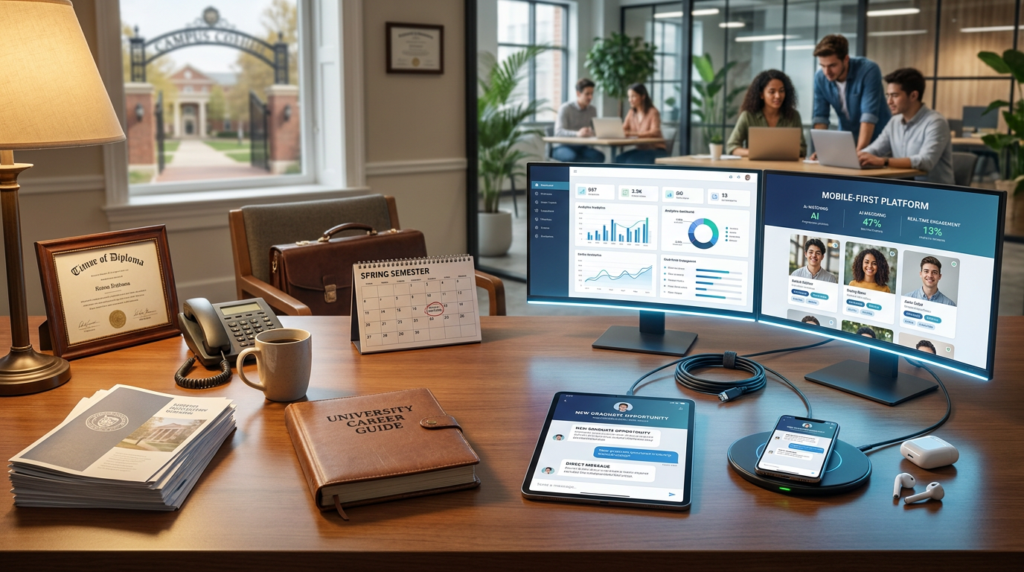


The Changing Landscape of Graduate Recruitment
Why Traditional Campus Recruiting Falls Short in 2026
Campus career fairs and university partnerships that worked perfectly in 2018 now feel like trying to reach Gen Z through a landline phone. The numbers tell a stark story: traditional campus recruiting yields have dropped 34% since 2022, while graduate hiring platforms report 67% higher engagement rates with the same talent pool.
The problem isn’t just about going digital (though that’s part of it). Traditional approaches assume graduates follow predictable timelines, waiting until spring semester to seriously consider post-graduation opportunities. But today’s graduates start researching employers 18 months before graduation, using mobile-first research methods that bypass career services entirely.
Consider the typical campus recruiting timeline: companies show up in February or March, compete with dozens of other employers in crowded auditoriums, and hope their branded swag makes an impression. Meanwhile, graduates have already formed opinions about potential employers based on LinkedIn content, Glassdoor reviews, and peer recommendations shared through private Discord servers.
The disconnect becomes obvious when you examine what actually influences graduate hiring decisions. Traditional recruiting focuses on company presentations and formal interview processes. But graduates prioritize authentic employee testimonials, clear growth trajectories, and transparent compensation information—elements that competitive intelligence reveals are better delivered through digital platforms than crowded career fairs.
The Rise of Digital-First Talent Acquisition
Graduate hiring platforms have fundamentally changed how companies connect with emerging talent, shifting from event-based recruiting to relationship-building that happens over months, not minutes. These platforms create persistent touchpoints where graduates can explore opportunities at their own pace, bookmark interesting positions, and engage with employer content when it’s convenient for them.
The data speaks volumes about this shift. Companies using dedicated graduate hiring platforms report 43% shorter time-to-hire metrics and 28% higher acceptance rates compared to traditional recruiting methods. The reason? Digital platforms allow for more nuanced candidate matching, connecting graduates with opportunities that align with their specific skills and career goals rather than generic “entry-level” positions.
Smart recruiting teams now treat Memorial Day weekend as a strategic inflection point. While competitors wind down recruiting efforts for the summer, forward-thinking companies use graduate hiring platforms to maintain momentum with candidates who are making final decisions about post-graduation plans.
These platforms also solve a critical timing problem in graduate recruitment. Traditional methods assume all graduates follow academic calendars, but increasingly, students graduate in December or August, pursuing accelerated programs or gap-year internships. Digital platforms accommodate these varied timelines, ensuring companies don’t miss talented candidates who don’t fit conventional recruiting schedules.
Understanding Gen Z Career Expectations
Gen Z brings radically different expectations to the job search process, prioritizing transparency, flexibility, and authentic company culture over traditional perquisites like ping-pong tables and free snacks. They expect detailed information about career progression, mentorship programs, and learning opportunities—information that’s difficult to convey effectively in brief campus interactions.
Research shows 78% of Gen Z graduates research potential employers for more than six months before applying, using multiple touchpoints to evaluate company culture and growth opportunities. They want to understand not just what they’ll do in their first role, but how that role connects to broader career objectives and skill development.
This generation also expects recruiting processes to respect their time and intelligence. They prefer self-directed exploration through comprehensive online resources over generic recruitment presentations. Graduate hiring platforms excel at providing this depth of information, allowing candidates to explore everything from team structures to professional development budgets.
The communication preferences are equally important. Gen Z candidates respond better to conversational, authentic messaging than formal corporate communications. They want to hear from actual employees, not just HR representatives, and they value peer perspectives over executive testimonials.
Market Competition for Entry-Level Talent
The competition for graduate talent has intensified dramatically, with companies across industries competing for the same pool of skilled candidates. Technology companies, consulting firms, and even traditional industries now offer similar starting salaries and benefits packages, making differentiation increasingly challenging through compensation alone.
This competitive landscape makes timing crucial. Companies that engage graduates early in their decision-making process gain significant advantages over those who wait for formal recruiting seasons. Using talent acquisition roi frameworks helps organizations understand which early engagement strategies deliver the highest returns.
The Memorial Day timing becomes strategically important because it coincides with summer internship placements and final semester planning. Graduates are making concrete decisions about their post-graduation trajectories, and companies with strong digital presence during this period capture mindshare when it matters most.
Modern recruiting teams recognize that winning top graduate talent requires year-round relationship building, not just seasonal recruiting pushes. Graduate hiring platforms enable this continuous engagement, ensuring companies remain visible and attractive throughout the extended decision-making process that defines today’s graduate job search.
Platform Features That Drive Graduate Engagement
Mobile-Optimized Application Experiences
Graduate candidates expect seamless mobile experiences that match consumer app standards. Modern recruiting websites must deliver application processes optimized for smartphones, where 78% of Gen Z job seekers begin their search.
Successful platforms feature thumb-friendly navigation, auto-fill capabilities, and one-touch social login options. Application forms break complex information into digestible steps, with progress indicators showing candidates exactly where they stand. The best systems allow resume uploads via cloud storage or LinkedIn integration, eliminating tedious manual data entry.
Smart platforms also leverage device capabilities like camera access for document uploads and location services for relevant job matching. When graduates can complete applications during their commute or between classes, engagement rates increase by 40% compared to desktop-only experiences.
AI-Powered Candidate Matching and Recommendations
Machine learning algorithms transform how platforms connect graduates with opportunities. Rather than basic keyword matching, advanced systems analyze candidate profiles, academic achievements, and career preferences to surface relevant positions automatically.
These platforms learn from user behavior, tracking which job types generate the most engagement and applications. A computer science graduate interested in fintech receives targeted recommendations based on similar successful placements, while marketing majors see opportunities aligned with their portfolio work and internship experience.
The technology extends beyond job matching to career pathing suggestions. Platforms can recommend skill development opportunities, networking events, and even salary benchmarking data. This comprehensive approach keeps candidates engaged throughout their job search journey, building long-term platform loyalty. Strategic assessment becomes crucial when evaluating ai-driven systems for maximum recruitment impact.
Interactive Assessment and Skills Testing
Modern platforms integrate assessment tools directly into the candidate experience, making skills evaluation engaging rather than burdensome. Gamified coding challenges, situational judgment tests, and portfolio showcases replace traditional screening methods.
Video assessment capabilities allow candidates to demonstrate communication skills and cultural fit through recorded responses. These tools particularly benefit introverted graduates who perform better with preparation time versus live interviews. Analytics track completion rates and performance metrics, helping recruiters identify top performers before first contact.
Interactive assessments also provide immediate feedback to candidates, creating value even if they don’t advance. This approach transforms screening from a black box process into a learning experience, encouraging candidates to return for future opportunities and recommend the platform to peers.
Social Media Integration and Employer Branding
Successful graduate hiring platforms seamlessly integrate with social networks where young professionals spend their time. LinkedIn profile importing streamlines registration, while Instagram and TikTok integrations showcase company culture through visual storytelling.
Employee-generated content becomes a powerful recruitment tool when platforms enable easy sharing of workplace experiences, project highlights, and team celebrations. Graduates trust peer perspectives more than corporate messaging, making authentic employee voices crucial for attraction.
Smart platforms also facilitate social proof through alumni networks and university partnerships. When graduates see classmates and mentors working at featured companies, application likelihood increases significantly. These connections create natural referral pathways that strengthen both candidate quality and employer brand perception among target demographics.
Real-Time Communication and Feedback Loops
Instant communication capabilities prevent candidate drop-off during extended recruitment processes. Chat functionality, push notifications, and status updates keep graduates informed and engaged throughout their application journey.
Automated messaging systems provide immediate acknowledgment of applications while scheduling follow-up touchpoints based on process timelines. Candidates receive updates about application status, interview scheduling, and next steps without requiring recruiter intervention for routine communications.
Feedback collection mechanisms help platforms continuously improve the candidate experience. Post-application surveys, interview feedback forms, and onboarding satisfaction metrics provide insights that drive product development. When selecting technology vendors, these feedback capabilities become essential for long-term platform success.
The most effective platforms also enable two-way communication, allowing candidates to ask questions, request clarifications, and provide their own feedback about the process. This transparency builds trust and demonstrates employer commitment to candidate experience excellence.
Strategic Timing and Seasonal Recruitment Planning
Optimizing Recruitment Campaigns for Spring Hiring Cycles
Spring hiring cycles represent a critical window for graduate recruitment, with companies competing for fresh talent before summer begins. Smart recruitment teams understand that timing their campaigns between February and April creates maximum impact when students are actively making career decisions.
The key lies in aligning your outreach with academic schedules. Most universities hold career fairs between March and early April, giving companies a concentrated period to showcase opportunities. Rather than launching broad campaigns, successful firms focus their efforts during these peak engagement windows when candidates are most receptive to new opportunities.
Graduate hiring platforms excel during these periods because they can rapidly scale outreach efforts while maintaining personalized communication. When properly configured, these systems can track engagement patterns and automatically adjust messaging based on candidate responses. This approach becomes particularly valuable when managing hundreds of graduate applications simultaneously.
Companies that leverage high-volume recruiting metrics during spring cycles often see 40-50% higher conversion rates compared to year-round campaigns. The concentrated timeframe forces both recruiters and candidates to make decisions quickly, reducing the typical lengthy graduate hiring process.
Leveraging Holiday Periods for Candidate Outreach
Holiday periods create unique opportunities for graduate recruitment that most companies overlook. While traditional wisdom suggests avoiding outreach during breaks, smart recruiters use these quieter periods for strategic relationship building and pipeline development.
Spring break represents an ideal time for informal candidate engagement. Students are relaxed, away from academic pressures, and more likely to respond to thoughtful outreach messages. This period allows recruiters to establish genuine connections without competing against immediate academic deadlines or exam stress.
Memorial Day weekend specifically offers a strategic advantage for graduation-season recruitment. Many new graduates use this long weekend to reflect on career options and respond to pending opportunities. Companies that maintain consistent communication during this period often secure commitments from candidates who might otherwise delay their decisions.
Modern recruitment platforms can automate thoughtful holiday outreach while maintaining personal touches. Automated sequences that acknowledge the holiday context while presenting relevant opportunities tend to generate higher response rates than generic recruiting messages.
Building Talent Pipelines During Academic Calendar Breaks
Academic breaks provide the perfect opportunity to build robust talent pipelines without the pressure of immediate hiring decisions. Winter break, spring break, and summer intersessions allow recruiters to engage with students who have time to explore career possibilities thoroughly.
During these periods, successful companies focus on relationship building rather than direct recruiting. They share industry insights, offer virtual coffee chats, and provide career guidance that positions them as trusted advisors. This approach creates stronger candidate relationships that convert to hires when graduation approaches.
Pipeline building during breaks requires different content strategies than active recruitment campaigns. Instead of focusing on specific job openings, companies should emphasize company culture, growth opportunities, and industry trends. This educational approach keeps candidates engaged while building brand affinity.
Technology plays a crucial role in maintaining these extended relationships. Recruiting Websites equipped with nurture campaign capabilities can maintain consistent touchpoints throughout academic breaks, ensuring candidates remain engaged until they’re ready to make career decisions.
Coordinating with University Career Services Schedules
University career services operate on predictable annual schedules that smart recruiters can leverage for maximum impact. Most schools plan their major recruiting events six months in advance, creating opportunities for strategic partnership and early positioning.
Career services typically host fall recruiting seasons for summer internships and spring seasons for full-time positions. Understanding these cycles allows companies to time their platform deployments and campaign launches for optimal student engagement. Early coordination often secures premium event spots and preferred communication channels.
Building relationships with career services staff creates long-term recruiting advantages. These professionals understand student preferences, can provide insights about competitive positioning, and often influence which companies students consider seriously. Regular communication throughout the year, not just during active recruiting periods, strengthens these partnerships.
The most effective approach involves integrating your recruiting platform with university systems when possible. Many career services departments can share job postings, event information, and candidate profiles through established digital channels, streamlining the entire recruitment process for both parties.
Technology Integration and Workflow Optimization
API Integrations with Existing HRIS Systems
Modern graduate hiring platforms excel when they seamlessly connect with your existing HR infrastructure. The most effective recruiting websites offer robust API capabilities that eliminate data silos between recruitment and human resources systems.
Leading platforms typically integrate with major HRIS providers like Workday, BambooHR, and SuccessFactors within 24-48 hours. This integration ensures candidate information flows automatically from initial application through onboarding, reducing manual data entry by up to 75% during peak hiring periods.
The real value emerges during Memorial Day recruiting pushes when volume spikes dramatically. Automated data synchronization means your HR team can focus on relationship building rather than administrative tasks. One staffing firm reported processing 300% more graduate applications during their 2025 Memorial Day campaign simply by implementing proper API connections.
Consider platforms that support bidirectional data flow. When your HRIS updates employee status or compensation bands, those changes should automatically reflect in your recruitment system’s offer generation tools. This real-time synchronization prevents embarrassing scenarios where outdated salary ranges appear in graduate offers.
Automated Screening and Initial Interview Scheduling
Graduate hiring success depends heavily on speed-to-contact metrics. The best candidates often have multiple offers within days of applying, making automated screening your competitive advantage for Memorial Day 2026 recruitment.
Smart screening algorithms can evaluate resumes against predefined criteria within minutes of submission. These systems typically assess GPA thresholds, relevant coursework, internship experience, and technical skills before any human reviewer sees the application. The result? Your recruiting team focuses only on qualified candidates who meet baseline requirements.
Advanced platforms incorporate martech automation strategies that trigger immediate interview scheduling for top-tier candidates. When a graduate meets all screening criteria, the system automatically sends calendar invitations with multiple time slot options. This approach reduces time-to-first-interview from an average of 5.2 days to under 24 hours.
Video screening capabilities add another efficiency layer. Platforms can deploy one-way video interviews for initial assessments, allowing candidates to complete responses on their schedule while giving recruiters standardized evaluation materials. This proves particularly valuable when recruiting across multiple time zones or managing high application volumes.
Data Analytics for Recruitment Performance Tracking
Successful Memorial Day hiring campaigns require real-time visibility into recruitment funnel performance. Graduate hiring platforms should provide comprehensive analytics that reveal both macro trends and granular conversion metrics.
Essential dashboards track source effectiveness, showing which job boards, university partnerships, or social media channels generate the highest-quality candidates. During intense hiring periods, this data enables rapid budget reallocation toward the most productive channels. One agency discovered their LinkedIn graduate recruitment ads generated 40% more qualified applications than traditional job board postings.
Time-based analytics become crucial during compressed hiring timelines. Platforms should show average time spent at each funnel stage, identifying bottlenecks before they impact candidate experience. If your screening process averages 3.5 days but competitors complete initial reviews in 24 hours, you’re losing top talent to faster-moving organizations.
Predictive analytics represent the next evolution in recruitment intelligence. Advanced staffing websites use historical data to forecast application volume, interview-to-offer ratios, and acceptance rates. These insights help staffing teams prepare appropriate resources for Memorial Day recruiting surges.
Multi-Channel Posting and Candidate Source Management
Graduate candidates consume job content across diverse platforms, requiring recruitment strategies that span multiple touchpoints. Effective hiring platforms centralize job posting management while maintaining channel-specific optimization.
Modern systems enable one-click posting across 50+ job boards, university career centers, and social media platforms. However, the most sophisticated platforms customize job descriptions based on each channel’s audience preferences. A posting for Indeed might emphasize salary and benefits, while the same role on a university career site highlights growth opportunities and mentorship programs.
Source tracking becomes essential when managing complex multi-channel campaigns. Platforms should attribute every candidate interaction back to its originating source, including secondary referrals and cross-channel conversions. This granular tracking reveals the true customer journey, which often spans multiple platforms before application submission.
Integration with career portal solutions creates seamless candidate experiences while maintaining detailed source analytics. When graduates discover positions through social media but apply via your branded career portal, the platform should credit both touchpoints appropriately.
Measuring Success and ROI in Graduate Hiring
Key Performance Indicators for Platform Effectiveness
Tracking the right metrics transforms your graduate hiring from guesswork into strategic advantage. The most successful firms focus on conversion rates at each funnel stage, starting with application-to-screening ratios. A well-optimized platform should deliver at least 15-20% qualified candidates from total applications, with top-performing recruiting websites achieving even higher rates.
Source quality indicators reveal platform effectiveness more than raw numbers. Track which channels bring candidates who advance beyond initial screening. Memorial Day hiring cycles typically see 40% higher application volumes, making quality filters essential. Monitor engagement metrics like profile completion rates, assessment participation, and time spent on job descriptions.
Platform utilization rates among your recruiting team matter equally. If recruiters bypass the system for manual processes, you’re losing efficiency gains. Successful implementations show 80%+ recruiter adoption within 90 days, with daily active usage remaining consistent throughout peak hiring periods.
Time-to-Hire Metrics and Process Efficiency
Graduate hiring timelines directly impact your competitive positioning in the Memorial Day rush. Industry leaders average 21-28 days from application to offer for entry-level positions, but leading platforms can compress this to 14-18 days without sacrificing quality. Every day matters when competing for top talent.
Break down your timeline into measurable segments: application to first contact (target: 24-48 hours), screening to interview scheduling (3-5 days), and interview to decision (5-7 days). Modern platforms automate scheduling and follow-ups, eliminating the back-and-forth that typically adds 7-10 days to traditional processes.
Bottleneck identification becomes crucial during high-volume periods. Most delays occur in interview scheduling and hiring manager feedback loops. Platforms with integrated calendar management and automated reminder systems show 35% faster progression through these stages. Track where candidates drop off to identify friction points that competitors might exploit.
Quality of Hire Assessment and Retention Tracking
Quality metrics extend far beyond initial hiring success. Track 90-day performance ratings, training completion times, and early retention indicators. Graduate hires who engage actively with your platform during recruitment typically show 25% better performance scores in their first quarter.
Retention tracking reveals long-term platform effectiveness. Measure 12-month and 24-month retention rates by recruitment source. Candidates sourced through sophisticated staffing websites often demonstrate higher retention because they received comprehensive information about role expectations and company culture during the application process.
Manager satisfaction scores provide another quality dimension. Survey hiring managers 30, 60, and 90 days post-hire about candidate preparedness, cultural fit, and skill alignment. High-performing platforms deliver candidates who score 4.2+ out of 5.0 on manager satisfaction surveys.
Skills assessment accuracy matters for technical roles. Compare platform-predicted competencies against actual performance in first projects. Leading platforms show 85%+ correlation between pre-hire assessments and manager evaluations after 60 days on the job.
Cost-per-Hire Analysis and Budget Optimization
Calculate total cost-per-hire including platform subscriptions, recruiter time, and hiring manager involvement. Graduate positions typically cost $3,200-4,800 per hire through traditional methods, while optimized platforms reduce this to $2,100-3,200 by eliminating manual touchpoints and reducing time-to-fill.
Memorial Day hiring campaigns require budget flexibility. Track incremental costs for enhanced features like priority candidate matching or extended job postings. Most platforms offer seasonal pricing that reduces per-hire costs during high-volume periods by 15-20%.
ROI calculations should include soft benefits like improved candidate experience and employer brand enhancement. Candidates who rate your recruitment process highly become brand ambassadors, generating referrals worth 2-3x their individual hire value. Modern platforms with streamlined user experiences consistently deliver Net Promoter Scores above 50.
Budget optimization comes through feature utilization analysis. Identify which platform capabilities drive the highest conversion rates and focus spending accordingly. Many firms overpay for advanced features they never use while missing cost-effective options that could improve results.
Compare platform performance against other recruitment investments like job boards, career fairs, and agency fees. The most successful platform implementations show 40-60% better cost efficiency than traditional recruitment methods while delivering superior candidate quality and experience.
Future-Proofing Your Graduate Recruitment Strategy
Emerging Technologies in Talent Acquisition
Artificial intelligence and machine learning are reshaping how organizations identify and engage graduate talent. Advanced algorithms now parse candidate profiles with precision that surpasses traditional keyword matching, analyzing communication patterns and project outcomes to predict cultural fit and performance potential. Video interviewing platforms incorporate sentiment analysis and facial recognition technology to provide deeper insights into candidate responses.
Predictive analytics tools help recruitment teams forecast hiring needs months in advance, allowing staffing websites to build talent pipelines before competitors recognize market opportunities. Chatbots equipped with natural language processing handle initial candidate screening, freeing recruiters to focus on high-value relationship building with top prospects.
Virtual reality assessment centers are emerging as powerful tools for evaluating graduates in simulated work environments. These immersive experiences provide candidates with realistic job previews while giving employers objective performance data across standardized scenarios.
Building Scalable Recruitment Processes
Successful graduate recruitment requires systematic approaches that can expand without proportional increases in manual effort. Automated workflow triggers move candidates through evaluation stages based on predetermined criteria, ensuring consistent experiences regardless of application volume. Integration between applicant tracking systems and onboarding platforms eliminates data silos that often slow the hiring process.
Template libraries for common recruitment communications maintain personalization while reducing time-to-response for high-volume periods. Standardized interview guides with built-in scoring rubrics help multiple team members evaluate candidates fairly and efficiently. Modern platforms supporting next-level job board provide the infrastructure necessary for these scalable approaches.
Recruitment analytics dashboards track key performance indicators in real-time, enabling quick adjustments when processes become bottlenecks. Source tracking reveals which universities, job boards, and referral programs generate the highest-quality candidates, allowing teams to optimize resource allocation for maximum impact.
Adapting to Remote and Hybrid Work Preferences
Graduate expectations around workplace flexibility have fundamentally shifted, requiring recruitment strategies that emphasize remote capabilities and hybrid work options. Job postings must clearly articulate location policies and remote work infrastructure to attract candidates who prioritize work-life integration. Virtual office tours and team introductions help remote candidates understand company culture and working relationships.
Assessment methods need updating to evaluate skills relevant to distributed work environments. Communication abilities, self-direction, and technological proficiency become critical evaluation criteria for graduates who may rarely work in traditional office settings. Interview processes should include scenarios that test collaboration across time zones and project management in virtual environments.
Onboarding programs require digital-first approaches that create meaningful connections between new hires and existing team members. Mentorship programs paired with collaborative technology platforms help graduates integrate into company culture despite physical distance. Recruiting Websites that showcase remote work success stories and employee testimonials demonstrate commitment to flexible work arrangements.
Continuous Platform Evaluation and Vendor Management
Technology landscapes evolve rapidly, making ongoing platform assessment essential for maintaining competitive advantage. Regular vendor performance reviews should examine user experience metrics, integration capabilities, and feature development roadmaps. Cost-per-hire analysis helps identify platforms delivering measurable value versus those consuming resources without improving outcomes.
Security and compliance requirements become increasingly complex as data protection regulations expand. Regular audits of vendor security practices and data handling procedures protect both candidate information and organizational reputation. Contract negotiations should include specific performance metrics and service level agreements that align vendor success with recruitment objectives.
Pilot testing new platforms with small candidate pools minimizes risk while providing insights into functionality and user adoption rates. Feedback from recruiting team members and candidates themselves reveals gaps between vendor promises and actual performance. Organizations considering upgrade your job benefit from structured evaluation processes that compare features, costs, and implementation requirements across multiple options.
The recruitment technology market offers unprecedented opportunities for organizations willing to embrace innovation and adapt their strategies. Success requires balancing cutting-edge tools with proven processes, ensuring technology enhances rather than complicates the candidate experience. Companies that invest in comprehensive platform evaluation and strategic vendor partnerships position themselves to capture top graduate talent consistently, creating sustainable competitive advantages that extend far beyond any single hiring season.